Instagram Reel Script Templates: 6 Formats
Try six original Instagram Reel script templates with example scripts for product FAQs, quick tutorials, comparisons and stories. Pick a format and fill it.
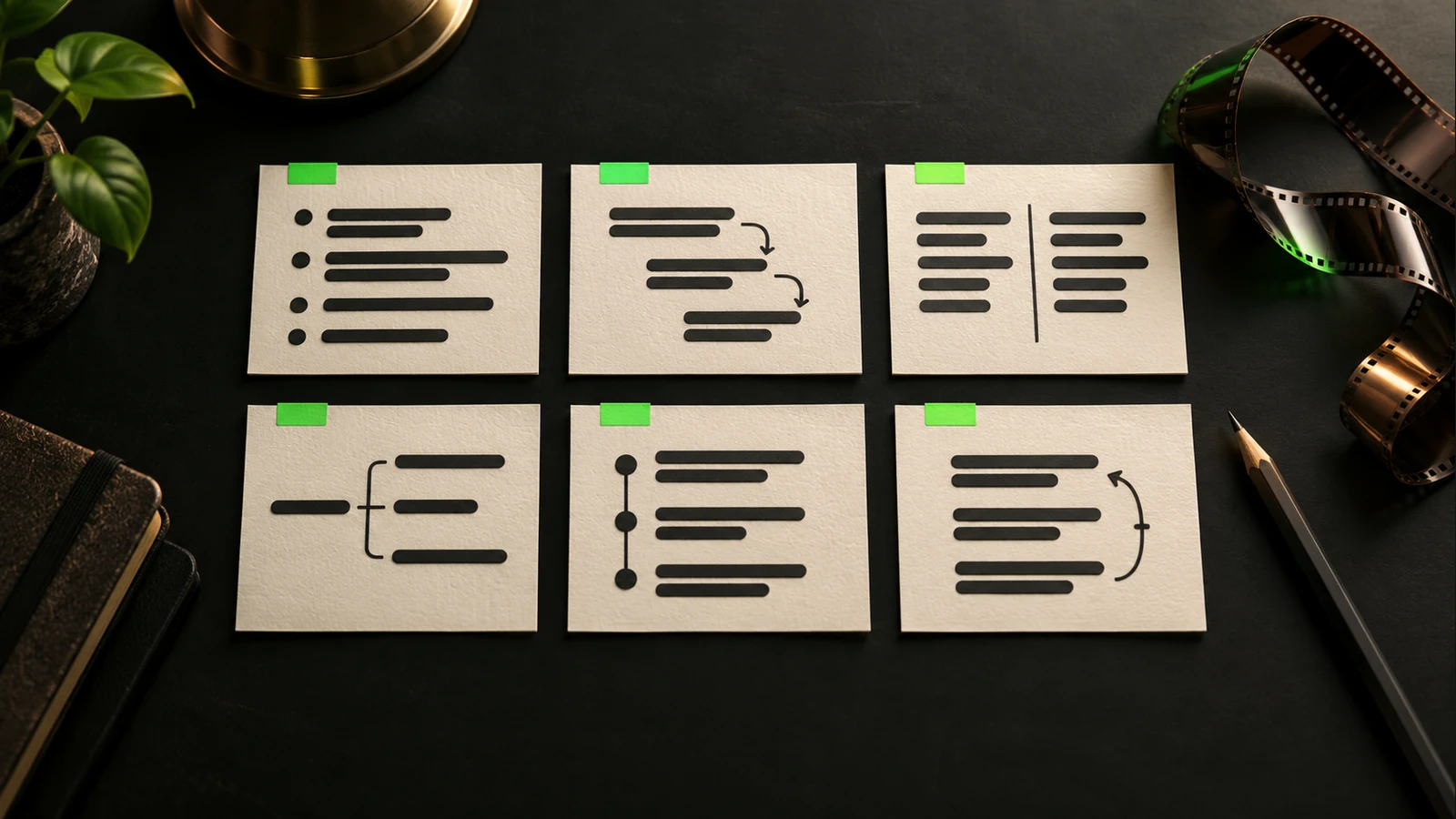
Choose the task your Reel should do: answer a buyer's question, show a change, teach a process, compare options, explain a condition or tell a decision story. Each format below has a fill-in outline and a complete sample script.
These Instagram Reel script templates use original practice examples. Replace their product details and situations with your own facts before recording.
Six Instagram Reel script templates with filled examples
Find the task closest to your next video. Copy the outline, then use the filled script to see how its parts connect.
1. Answer a product question
A product answer needs a detail a buyer can inspect, such as its dimensions or the way a part opens.
Question: [one buying question]
Answer: [the useful decision rule]
Show: [the product detail the viewer can inspect]
Check: [a measurement or condition they need]
Close: [what to do before choosing]
Filled script: choosing a notebook online
Choosing a notebook online? Start with the listed height
and width, then compare them with one you already use.
Here is how the small and large versions sit beside a phone.
For a pocket notebook, check thickness too.
Pick the size for the place you will actually carry it.
2. Show a change with a before-and-after view
Show both versions. Then name the step that changed. A reveal without that step makes the result hard to repeat.
Before: [show the original setup]
Change: [the specific action]
After: [show the changed setup]
Reason: [why it fits this task]
Close: [where the viewer can try it]
Filled script: a desk ready for writing
This desk is set up for three projects at once.
For today's writing session, only the notebook and reference
page stay within reach. The other project materials go into
labeled trays. Tomorrow the setup can change with the task.
Clear space for the work you are doing now.
3. Teach one small process
Write in the order the task happens, with an action the camera can show on each line.
Result: [the small task you will finish]
Prepare: [what needs to be ready]
Do: [the actions in order]
Check: [how to tell a step is finished]
Close: [the next stage]
Filled script: preparing a recipe shoot
Before filming a recipe, arrange the ingredients in the
order you will use them. Put the first step's ingredients
nearest the board, and check their names against the script.
Record a clear view of each one before the preparation starts.
Now the written list and the opening shots follow the same order.
4. Compare two options for one situation
Test both options with the same person, task and objects. That keeps the decision concrete.
Situation: [what the viewer is doing]
Option A: [when it fits]
Option B: [when it fits]
Test: [compare them with the same task]
Close: [the decision rule]
Filled script: a bag for a workshop
Backpack or tote for a workshop? Pack the notebook, tools
and water bottle you will actually take, then try both bags.
A backpack is an option when you want both hands free.
A tote can suit a trip where you keep reaching in from the top.
Choose with your normal load in the bag.
5. Explain the condition behind a statement
Choose this format when a missing condition changes what a statement means, as with a delivery estimate.
Statement: [the broad wording]
Condition: [what changes its meaning]
Example: [show the difference in one case]
Explanation: [the precise version]
Close: [what to ask or check]
Filled script: explaining a delivery estimate
An estimate is useful when it names what might change.
Friday could mean an order is accepted, a parcel leaves the
shop, or the parcel arrives at your door. When you explain
a timeline, name the event and the condition that can move it.
Make clear which part is confirmed and which is still an estimate.
6. Tell a decision story
Build the story around a choice and its cost. For a personal story, fill the outline with an experience you can describe truthfully. This practice example uses a fictional maker.
Situation: [the task and constraint]
Choice: [the options available]
Decision: [the reason for the chosen option]
Trade-off: [what the choice improved and cost]
Close: [what this changes for the next attempt]
Filled script: filming a mug demonstration
A mug demonstration starts with a wide view of the table.
It shows the tools, but the join on the handle is too small
to inspect. The maker adds a close view of that join, then
returns to the wide shot for context. The sequence needs
both views, so the filming plan includes that extra shot.
Choose by what you can show
A product question needs an answer and a visible detail. A tutorial needs a sequence. A story needs an actual decision. Choose the structure that fits the material you have.
If the material does not support a promised result, change the task before adding a stronger hook. Keep an Instagram Reel hook specific enough that the rest of the video can deliver it.
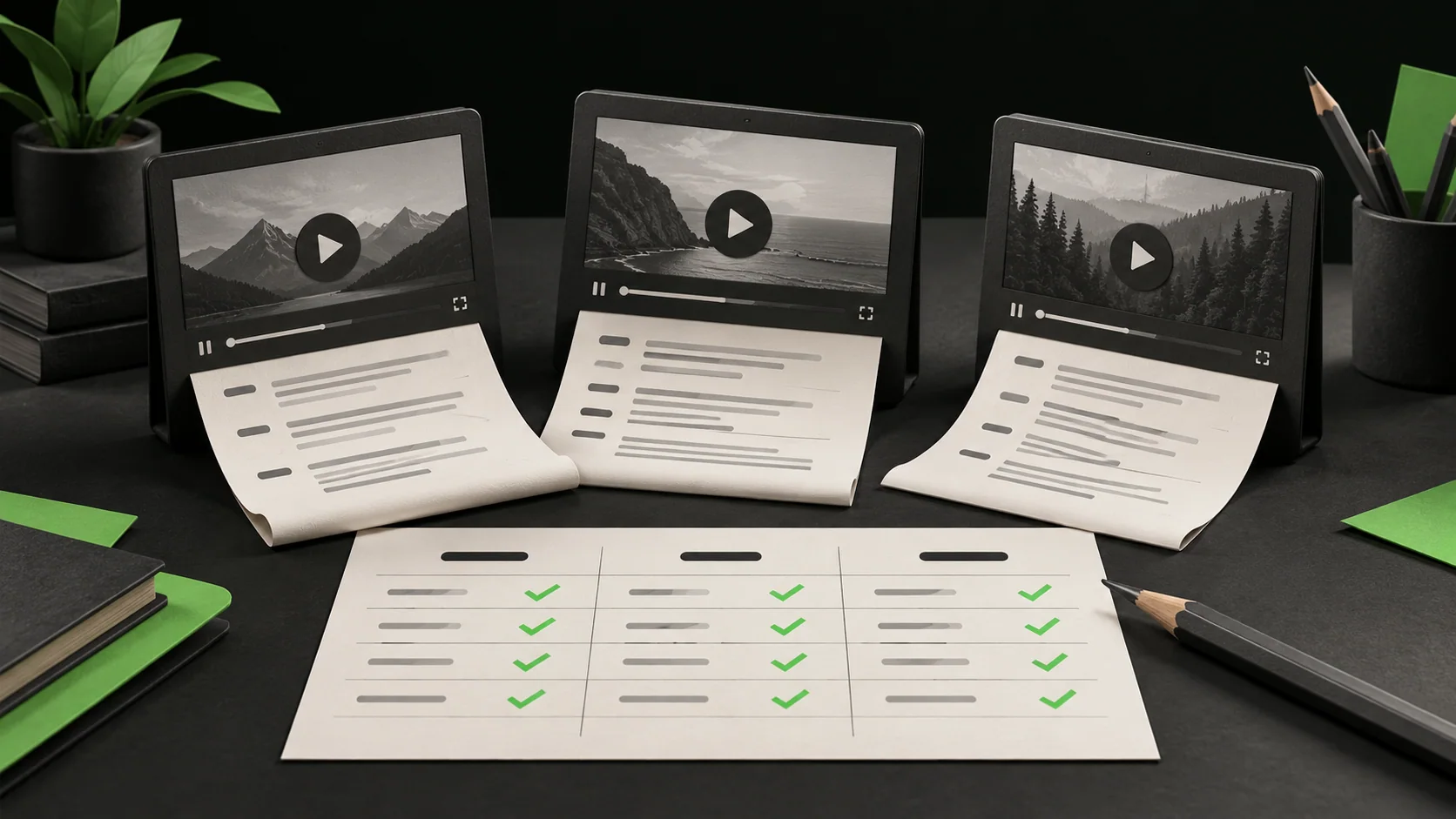
| Your material | Use this format | Prepare before recording |
|---|---|---|
| A product question | 1. Product answer | The relevant product details |
| Two views of a changed setup | 2. Before and after | Both versions and the changed step |
| A task you can demonstrate | 3. Small process | The objects and actions in order |
| Two workable choices | 4. Comparison | One shared test or situation |
| A statement with a missing condition | 5. Clarification | A concrete example of that condition |
| A real choice and its consequences | 6. Decision story | The options, decision and trade-off |
Fill the outline before polishing the words
For the notebook example, the buyer's task is choosing a size online. The script answers with a comparison method, shows a familiar object for scale and directs the viewer to the actual measurements.
Prepare the product, the reference object and the relevant measurements before recording. Put the items in the same shot so the viewer can make the comparison you describe.
| Outline field | What the notebook script supplies |
|---|---|
| Question | How to choose a notebook size online |
| Answer | Compare its listed dimensions with a notebook already in use |
| Show | The sizes beside the same reference object |
| Check | Height, width and thickness for the intended space |
| Close | Choose for the place it will be carried |
Record a rough read and check what you said
Read the filled script aloud and time your own delivery. Cut a repeated explanation, or split a sentence that is awkward to say. The examples are starting drafts; adjust them to your voice and the shots you can film.
After recording, compare a checked transcript with the written draft. A missing step or an unexplained jump is easier to spot when you can see the words beside the plan.
The transcript records speech. Replay the video when the explanation depends on a close-up, a gesture or an object. Your Reel call to action should follow from the task you just helped the viewer complete.
Questions about using the templates
How long should the script be?
Time a spoken draft of the one task you want to cover. Shorten repeated explanations and keep the steps or context the viewer needs to follow it.
Can I reuse the format for another subject?
Yes. Replace the question, evidence and example with material from that subject. Keep the structure only when it helps explain the new task.
Can I copy the sample scripts as they are?
They are original practice examples. Adapt the facts, products, demonstrations and experience to your own situation before presenting them as yours.
Does the website write the new script for me?
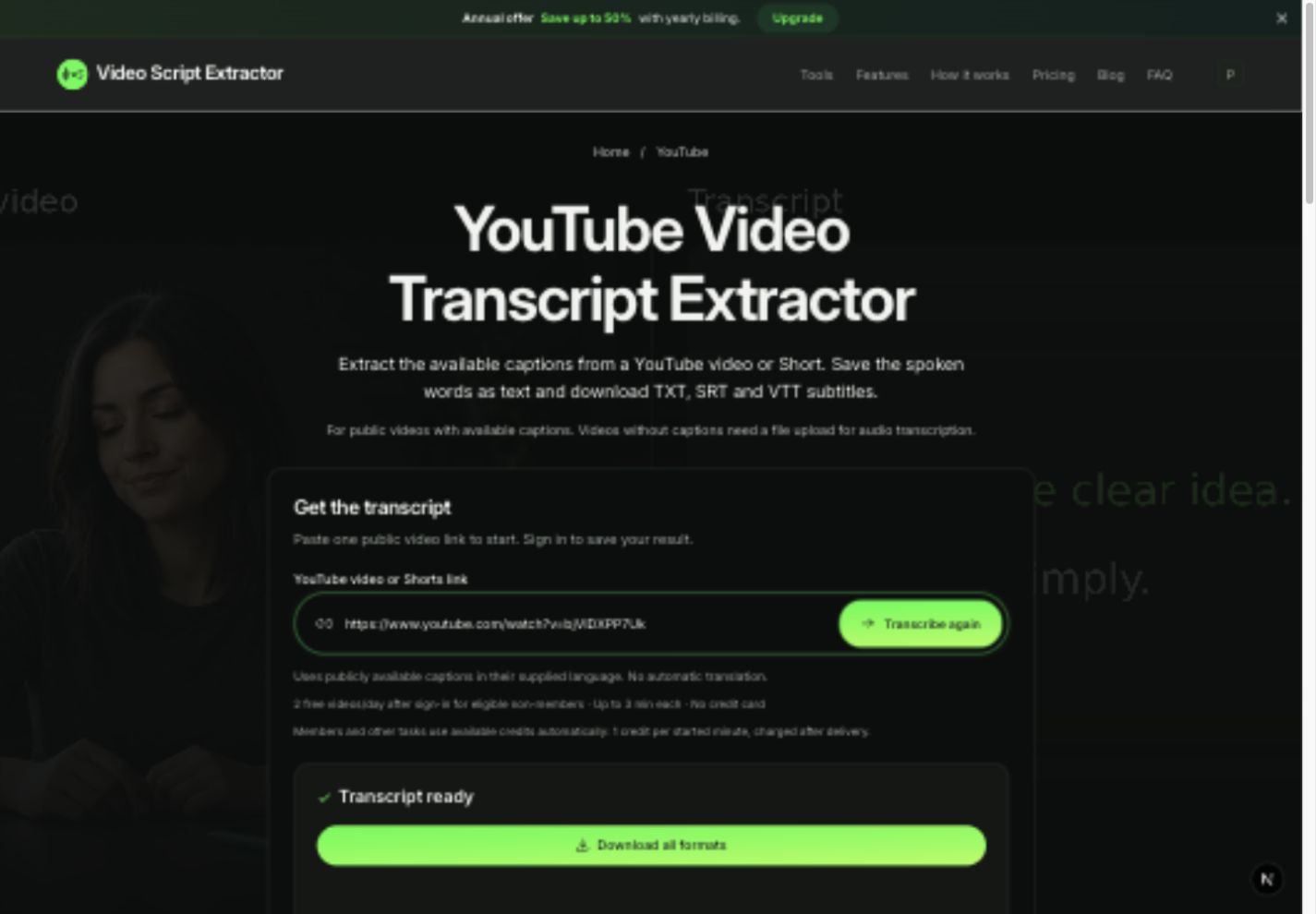
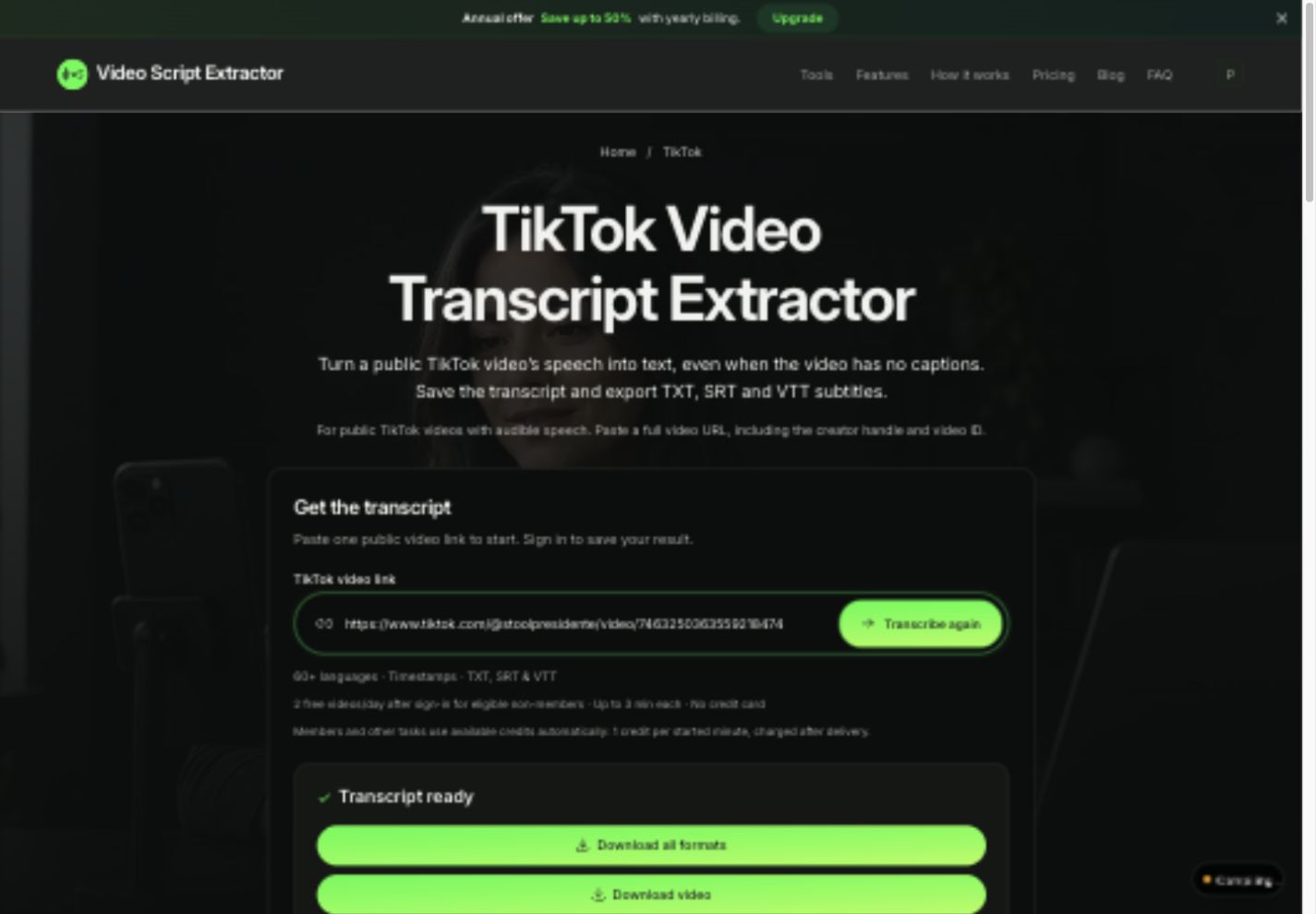
Video Script Extractor provides the spoken transcript from supported sources. Use it to study or check a recording, then write the new draft yourself or in a separate writing tool.
Take one format into your next recording
Use the Instagram Reel script templates as a working outline. Before recording, check that you can supply every product detail, action or experience in the filled draft.
Keep that draft when you edit the video. Compare it with the spoken transcript to decide what needs another take.