How Students, Journalists & Researchers Fact-Check Video Quotes with Timestamps
Need to quote a public video accurately or turn educational clips into searchable study notes? Learn how timestamped TXT, SRT, and VTT transcripts keep research verifiable.
Short-form videos and social clips have become primary sources for journalism, policy research, and online learning. Yet unlike articles or PDFs, raw video cannot be searched with `Ctrl+F`, and scrubbing through a timeline to verify a single sentence wastes valuable research time.
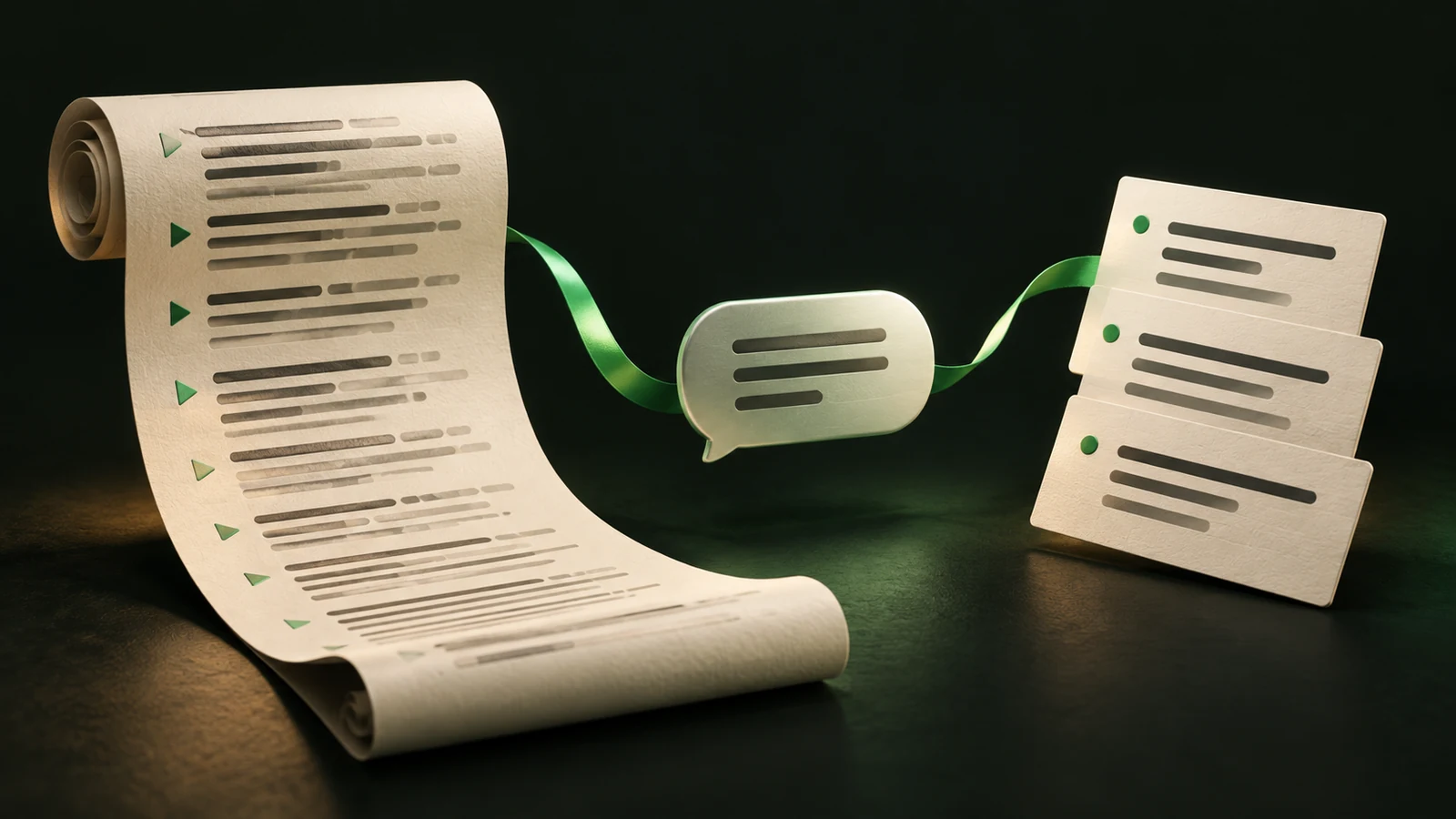
Combining a **plain-text transcript (`.txt`)** with **segment timestamps (`.srt` / `.vtt`)** gives researchers, reporters, and students both fast readability and exact source verification.
1. For Journalists & Fact-Checkers: Verifiable Quote Archiving
- Capture Exact Spoken Words: Extract transcripts from public X (Twitter) clips, Facebook page videos, Instagram Reels, TikToks, or captioned YouTube videos via Video Script Extractor.
- Jump to Exact Seconds via SRT Timestamps: Open the exported
.srtfile to find the start and end times for transcript segments (00:01:14,200 --> 00:01:18,900). Replay the matching passage in the source video before publishing. - Preserve Source Provenance: Save the original public URL at the top of your
.txtfile alongside the retrieval date so editors can audit the primary source anytime.
2. For Students, Educators & Language Learners: Searchable Study Notes
- Turn Short Tutorials into Study Outlines: Extract
.txttranscripts from educational Reels, TikToks, or local MP4/WebM lecture clips (up to 25MB) and paste them into Notion or Google Docs to highlight key definitions. - Original-Language Transcripts Across 60+ Languages: Language learners can transcribe native-speaker clips in Spanish, French, Japanese, Korean, German, and 55+ other languages without auto-translation distortion, building accurate vocabulary lists from real spoken context.
- Accessible Course Materials: Educators uploading short training clips to web LMS platforms can attach the exported
.vttfile to provide closed captions for students.
Frequently Asked Questions (FAQ)
Should I verify names, dates, and numbers after transcribing a research clip?
Yes. Always cross-check proper nouns, technical terms, and statistics against the spoken audio using the .srt timestamps before quoting a transcript in an article or academic paper.
Can I transcribe a local lecture recording saved on my laptop?
Yes. If your clip is saved in MP4 or WebM format (up to 25 MB), upload it directly on the Video Transcription page to generate TXT, SRT, and VTT files in your browser.